|
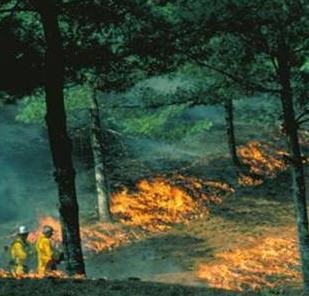
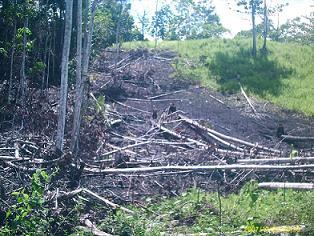
Forest - is a large area of land covered with trees. But a forest is much more than just trees. It also includes smaller plants, such as mosses, shrubs, and wildflowers. In addition, many kinds of birds, insects, and other animals make their home in the forest. Millions upon millions of living things that can only be seen under a microscope also live in the forest. Climate, soil, and water determine the kinds of plants and animals that can live in a forest. The living things and their environment together make up the forest ecosystem. An ecosystem consists of all the living and nonliving things in a particular area and the relationships among them. The forest ecosystem is highly complicated. The trees and other green plants use sunlight to make their own food from the air and from water and minerals in the soil. The plants themselves serve as food for certain animals. These animals, in turn, are eaten by other animals. After plants and animals die, their remains are broken down by bacteria and other organisms, such as protozoans and fungi. This process returns minerals to the soil, where they can again be used by plants to make food. Although individual members of the ecosystem die, the forest itself lives on. If the forest is wisely managed, it provides us with a continuous source of wood and many other products. Before people began to clear the forests for farms and cities, great stretches of forestland covered about 60 per cent of the earth's land area. Today, forests occupy about 30 per cent of the land. The forests differ greatly from one part of the world to another. For example, the steamy, vine-choked rain forests of central Africa are far different from the cool, towering spruce and fir forests of northern Canada.Forests have always had great importance to people. Prehistoric people got their food mainly by hunting and by gathering wild plants. Many of these people lived in the forest and were a natural part of it. With the development of civilization, people settled in cities. But they still went to the forest to get timber and to hunt. Today, people depend on forests more than ever, especially for their (1) economic value, (2) environmental value, and (3) enjoyment value. The science of forestry is concerned with increasing and preserving these values by careful management of forestland. Economic value. P E N E L I T I A N
File-file tulisan ilmiah dalam website ini lebih banyak menggunakan format PDF sehingga memerlukan program Acrobat Reader untuk membukanya.
Research into the causes and treatment of illnesses is the most important weapon against disease. Advances in medical care and prevention would not occur without knowledge provided by research. For example, intense research has shown how AIDS is transmitted and how its spread can be prevented. New treatments have also been developed. These advances have led to better understanding of how viruses work and may one day lead to cures for other viral illnesses. Much research occurs in laboratories, where scientists explore the basic chemical and cellular processes involved in disease. Other research projects involve epidemiologic studies. These studies investigate patterns of disease in hopes of identifying causes and methods of prevention. Many drug studies are conducted using the double-blind method. This method compares the effectiveness of two similar drugs or of a drug and a placebo (dummy treatment). Such studies are arranged so that neither doctors nor patients know which form of treatment participants are receiving. This double ignorance-or "blindness"-of both doctors and patients gives these studies their name. This ignorance ensures that the expectations of doctors and patients will not affect patients' response to treatment.
|
|---|
|
|---|