logo irwantoshut.com


BEST IMAGES
 
superman returns
 
James Bond 007
 
body building
 
michael jackson
 
batman
 
spiderman
 
secret of britney
 
HARRY POTTER
 
 
SCHOLARSHIP
 
indonesia forest pictures
 
CDM REDD
 
indonesia forest
 
save forest
 
back to nature
 
mangrove
 
nature healthy
 
indonesia forester blog
 
influenza
 
secret of woman
 
ambon city
 
FOREST NEWS


Search www.irwantoshut.com


Custom Search


Potential Outcome

(The following is an adaptation of the analysis of potential outcomes of climate change delineated by the Intergovernmental Panel on Climate Change (IPCC) in their second assessment report).

Rising Temperatures

The average surface temperature of the earth has increased by about 1°F in the past century. To many, a 1°F temperature change may seem trivial. However, consider "the year without a summer" - 1816.
Atmospheric ash from a volcanic eruption in Southeast Asia decreased solar radiation reaching the earth's surface, lowering the global mean temperature. As a result, frost occurred in July in New England and crop failures occurred throughout the world. Yet the temperature change caused by this eruption was less than 1°F (Stommel et al. 1979).


Potential Outcome Global Warming

Surface temperature increases are projected to increase 1.8-6.3 °F in the next century, with scientists' best guess being about 3.5 °F. Scientific modeling suggests that the surface temperature will continue to increase beyond the year 2100 even if concentrations of greenhouse gases are stabilized by that time. However, if carbon dioxide emissions continue to increase at present rates, a quadrupling of pre-industrial CO2 concentration will occur not long after the year 2100. Projected temperature increases for such an atmospheric concentration are 15-20 °F above the present day mean annual global surface temperature.

Sea Level Rise

Increasing global temperatures causes the thermal expansion of sea water and the melting of icecaps which will result in rising sea level. Sea level has risen 4 to 10 inches this century and is predicted to rise another 6 to 37 inches in the next century. A doubling of pre-industrial CO2 concentration (550 ppm) is predicted to result in a sea level rise of greater than 40 inches. A sea level rise of 80 inches is projected for an atmospheric CO2 concentration of 1100 ppm, a quadrupling of pre-industrial levels. Sea level rise increases the vulnerability of coastal populations to flooding and causes land to be lost to erosion. There are currently 46 million people around the world who are at risk due to flooding from storm surges. With a 50 cm sea level rise (approx. one and ½ feet), that number will increase to 92 million. Raise sea level 1 meter (about 3 feet) and the number of vulnerable people becomes 118 million. A 1 meter increase in sea level will be enough to flood 1% of Egypt, 6% of the Netherlands, 17.5% of Bangladesh, and 80% of the Majuro Atoll in the Marshall Islands. Rising waters might force the occupants of numerous small island nations to migrate elsewhere, as many of them lack the coastal defense systems to cope with higher water levels.

Intensification of the Hydrologic Cycle

Warming will likely result in an increase in the amount of water exchanged among the oceans, atmosphere, and land. Increasing rates of evaporation will likely result in drier soils. An accelerated hydrologic cycle means greater amounts of precipitation in some areas and will probably result in more frequent and severe droughts and floods. This prediction has rung true already. In the early '90's, two 100-year floods occurred in less than 5 years in the Midwestern United States. Significant changes in water volume, distribution, and supply are predicted and will likely have a dramatic impact on regional water resources.

Health Effects

A warming earth will most likely have a spectrum of largely negative impacts on human health. The predicted decrease in the difference between day and night temperatures will result in more thermal extremes. Therefore, an increase in mortality from heat stress is likely (e.g. 465 deaths in Chicago during the summer of 1995). As a result of warming, the area of the earth's surface experiencing "killing" frosts will probably decline. As a result, there will likely be an increase in the geographical range of vector-borne (e.g. mosquito carried) diseases such as malaria, dengue, yellow fever, and encephalitis. Currently, 45% of the world's population is within the zone of potential malaria transmission. With predicted temperature increases, there will likely be an additional 50 to 80 million cases of malaria worldwide, bringing the percentage of the world's people within the susceptible zone to 60%.

It is also likely that increasing temperatures will result in a decline in air quality due to increases in the abundance of air pollutants, pollen, and mold spores. An increase in the number of cases of respiratory disease, asthma, and allergies is likely to follow. The change in the frequency and intensity of extreme weather events (e.g. floods and droughts) combined with warmer atmospheric temperatures, will probably result in a host of adverse health effects, among them, exposure to contaminated water supplies and death from diseases.

Dramatic Effects on Ecosystems

Both plant and animal species are sensitive to climate. Due to global warming, ideal temperature and precipitation ranges suitable for present life forms may shift dramatically and rapidly, more rapidly than the species that depend upon them can adapt to naturally. A decline in biodiversity and in the goods and services provided by most ecosystems is a likely result. However, a lengthening of the growing season is also predicted for some high latitude regions. Which means that these regions will likely experience an increase in potential for agricultural production.

Forests

Within the next 100 years many forest species may be forced to migrate between 100 and 340 miles in the direction of the poles. The upper end of this range is a distance typically covered by migrating forests in millennia, not in decades. A decline in species composition is predicted and some forest types may disappear from the earth, while new ones may be established.

Rangelands

Changes in growing seasons and shifts in the boundaries between grasslands, forests, and shrublands are projected results of changing temperature and precipitation regimes. Increased levels of carbon dioxide in the atmosphere may result in a decline in food values of grasses for herbivores.

Deserts

Desert regions are likely to be more extreme, becoming even hotter than they are presently. The process of desertification will be more likely to become irreversible due to drier soils and land degradation through erosion and compaction.

Cryosphere

In the next 100 years between one third and one half of the world's mountain glaciers could melt, affecting the water supply to rivers and thus hydroelectric dams and agriculture. As is already being observed in Alaska, the areal extent and depth of permafrost are projected to decline, resulting in adverse effects on human infrastructure. A decrease in the extent and thickness of sea-ice will likely improve the navigability of the Arctic Ocean.

Mountain Regions

Warming temperatures will probably induce a shift in the distribution of vegetation to higher elevations. Living creatures that exist only at high elevations will possibly become extinct due to the disappearance of habitat or the decline in migration potential. Recreational industries (e.g. ski industry) are likely to be disrupted, having a severe adverse effect on the economies of some regions. The high elevation populations of developing nations will probably suffer from a decline in the abundance of food and fuel.

Lakes, Streams, Wetlands

Climate change is predicted to alter water temperatures, flow regimes, and levels. Such changes will likely cause an increase in biological productivity at high latitudes, but may result in extinctions for low latitude, cool and cold water species. Increased variability in flow, which will result if the frequency and duration of large floods and droughts increases, will tend to reduce water quality, biological productivity, and the habitat in streams.

Coastal Systems

Climate change and sea level rise, or changes in storms or storm surges could cause the erosion of shores and associated habitat, an increase in the salinity of estuaries and freshwater aquifers, a change in tidal ranges in rivers and bays, a change in sediment and nutrient transport, a change in the pattern of chemical and microbiological contamination in coastal areas, and an increase in coastal flooding. The ecosystems at risk are salt water marshes, mangrove ecosystems, coastal wetlands, coral reefs, coral atolls, and river deltas.

Oceans

Changing atmospheric temperatures will change patterns of ocean circulation, vertical mixing, wave climate, and quantities of sea-ice cover. These changes will affect nutrient availability, biological productivity, and the structure and function of marine ecosystems. Paleoclimate (past climate) data and models show that major changes in ocean circulation can be caused by freshwater additions to the oceans from the movement and melting of sea ice or ice sheets and can result in rapid and dramatic changes in climate. Abrupt shifts in climate have had adverse effects on human civilizations in the past. Paleoclimate data suggest that the collapse of the Mesopotamian Empire about 4,200 years ago (2,200 BC) corresponds to a sharp cooling event (Alley & deMenocal, 1998).

Fisheries

Rising temperatures are not predicted to change the global average production; however, significant regional changes are likely. Production is projected to increase in high latitudes, in freshwater and from aquaculture. Warmer climates should increase the growing season, decrease natural winter variability, and improve growing rates in high latitude regions. However, these beneficial results may be counterbalanced by changes in reproductive patterns, migration routes, and ecosystem relationships.
GLOBAL WARMING ARTICLE
Global Warming Pictures
Scientific Evidence Increasing Temperatures & Greenhouse Gases
Global Warming The Greenhouse Effect
Global Warming: Can Earth Explode ?
Global Warming : Earth at Warmest in 400 Years.
NASA Study Finds World Warmth Edging Ancient Levels
Earth's temperature near highest level in a million years
The Kyoto Protocol
The Culprits
Global warming 'threatens Earth with mass extinction'
Global Warming : What the Skeptics Don't Tell You
Potential Outcome

Food Production

Total global food production is not expected to change substantially as a result of climate change, but production will probably change dramatically regionally. Some areas will have increasing crop yields.

Others will decline, especially in tropical and subtropical regions. The flexibility in crop distribution (the variety of crops that can be grown in a region) is predicted to decline. Developed countries may be able to adapt to these circumstances. Developing countries that currently struggle with these issues will suffer even more. Source: www.whrc.org

GLOBAL WARMING

Global warming is an increase in the average temperature of Earth's surface. Since the late 1800's, the global average temperature has increased about 0.7 to 1.4 °F (0.4 to 0.8 °C). Many experts estimate that the average temperature will rise an additional 2.5 to 10.4 °F (1.4 to 5.8 °C) by 2100. That rate of increase would be much larger than most rates of past increases.

Scientists worry that human societies and natural ecosystems might not adapt to rapid climate changes. An ecosystem consists of the living organisms and physical environment in a particular area. Global warming could cause much harm, so countries throughout the world have drafted an agreement to limit it. However, that agreement, known as the Kyoto Protocol, has not yet been ratified (formally approved).

Causes of global warming

Climatologists (scientists who study climate) have analyzed the global warming that has occurred since the late 1800's. A majority of climatologists have concluded that human activities are responsible for most of the warming. Human activities contribute to global warming by enhancing Earth's natural greenhouse effect. The greenhouse effect warms Earth's surface through a complex process involving sunlight, gases, and particles in the atmosphere. Gases that trap heat in the atmosphere are known as greenhouse gases.

The main human activities that contribute to global warming are the burning of fossil fuels (coal, oil, and natural gas) and the clearing of land. Most of the burning occurs in automobiles, in factories, and in electric power plants that provide energy for houses and office buildings. The burning of fossil fuels creates carbon dioxide, whose chemical formula is CO2. CO2 is a greenhouse gas that slows the escape of heat into space. Trees and other plants remove CO2 from the air during photosynthesis, the process they use to produce food. The clearing of land contributes to the buildup of CO2 by reducing the rate at which the gas is removed from the atmosphere or by decomposition of dead vegetation.

A small number of scientists argue that the increase in greenhouse gases has not made a measurable difference in the temperature. They say that natural processes could have caused global warming. Those processes include increases in the energy emitted (given off) by the sun. But the vast majority of climatologists believe that increases in the sun's energy have contributed only slightly to recent warming.

   
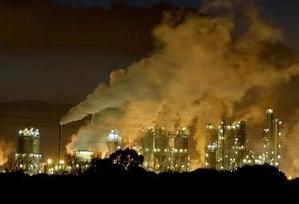
smoke potential outcame potential outcame  global warming
HOME
GLOBAL WARMING
INDONESIA FOREST
INDONESIA BIODIVERSITY
CDM IN INDONESIA
MANGROVE FOREST
THE IMPORTANCE OF TREES
FOREST AND ECOLOGY
KIND OF CONSERVATION
KIND OF BIODIVERSITY
HOW PLANTS GROW
FOREST PICTURES
HEALTHY BODY
INVEST IN SERAM
FOREX TRADING
MAKING LOANS
MORTGAGE
GUESTBOOK
PENELITIAN
PAPER / ARTIKEL
KULIAH KEHUTANAN
PERJALANAN
DIARY
GAMBAR / LOGO
BERITA KEHUTANAN
PROSIDING NFP
KESEHATAN TUBUH
KOTA AMBON
UNIVERSITAS PATTIMURA
TIPS MAHASISWA
BIODATA IRWANTO
PHOTO PRIBADI
FACEBOOK IRWANTO
BUKU TAMU
 

EARN MONEY

money

 
DOWNLOAD FREE SOFTWARE
FREE SOFTWARE
DOWNLOAD FREE
GAMES

FREE GAME
 

PICT & BOOKS

BEST PICTURE

 
BOOKS DEGRADATION
 
SEED RARE
 
 
Related Links
MANGROVE WEBS COM
BACK TO
NATURE
NATURE
HEALTHY
SAVE FOREST
WEBS
FORESTER'S BLOG
WORDPRESS
ENVIRONMENTAL MANAGEMENT COMPANY
PROJECT CDM IN INDONESIA

Privacy Policy
Google Adsense

Google Mail

Yahoo Mail

Adwords

Adbrite

email:
irwantoshut@yahoo.com. irwantoshut@gmail.com.
sms: 081343007763

Subscribe to updates

free counters
2012 END OF THE WORLD

TIP : You can search the information more efficient by using Search Engine. Type 2 or 3 words you want by using "quatation mark" and The search engine will produce 2 or 3 words in unity (not separate). For Example: "Global Warming"
if you want PDF format, type: filetype:pdf
Example: "Global Warming" filetype:pdf

Custom Search

Increasing the concentration of these gases in the atmosphere increases the atmosphere's ability to block the escape of infrared radiation. In other words, climate change global warming the earth's insulator gets thicker. Therefore too great a concentration of greenhouse gases can have dramatic effects on climate and significant repercussions upon the world around us. Climates suitable for human existence do not exist simply above some minimum threshold level of greenhouse gas exist within a finite window - a limited range of greenhouse gas concentrations that makes life as we know it possible. GLOBAL WARMING Earth at Warmest in 400 Years. There is sufficient evidence from tree rings, boreholes, retreating glaciers, and other "proxies" of past surface temperatures to say with a high level of confidence that the last few decades of the 20th century were warmer than any comparable period in the last 400 years, according to a new report from the National Research Council. Less confidence can be placed in proxy-based reconstructions of surface temperatures for A.D. 900 to 1600, said the committee that wrote the report, although the available proxy evidence does indicate that many locations were warmer during the past 25 years than during any other 25-year period since 900. Very little confidence can be placed in statements about average global surface global warming consequences temperatures prior to A.D. 900 because the proxy data for that time frame are the committee added 2006 on pace to be warmest year on record in the US. The average temperature for the continental United States from January through June 2006 was the warmest first half of any year since records began in 1895, according to scientists at the National Oceanic & Atmospheric Administration's (NOAA) National Climatic Data Center (NCDC) World temperatures highest in 1200 years. World temperatures are higher than in any period over the last 1,200 years, according to a study published in the current issue of Science. In reaching their conclusion, a research team from the University of East Anglia in Britain analyzed 14 sets of temperature records including data from rings, fossil shells, ice cores, temperature records, and historical documents from North America, Europe and East Asia. Carbon highest in 650,000 years. Solar radiation. global warming facts. interacts with the surface of the earth in several ways. Some portion of this energy is reflected back into space by the earth's atmosphere, another portion is dispersed and scattered by the molecules in the atmosphere and a large portion penetrates through the earth's atmosphere to reach the surface of the earth. The radiation reaching the earth's surface is largely absorbed resulting in surface warming much of this absorbed global warming causes energy is eventually re-radiated in longer infrared wavelengths. As it leaves the earth, it once again interacts with the atmosphere. Some of this re-radiated energy escapes to space, but much of this re-radiated energy is reflected back to the earth's surface by molecules in the earth's atmosphere. This phenomenon is similar effects global warming to the warming that occurs in an automobile parked outside on a sunny day. The molecules responsible global warming effect for this phenomenon are called greenhouse gases, i.e. water (H2O), nitrous oxide (N2O), methane (CH4), and carbon dioxide (CO2) because they act like the glass in a greenhouse, trapping re-radiated energy. Without these gases most life on earth would not be possible, as the surface temperature of the earth would likely be about 60°F colder. In essence, greenhouse gases act like an insulator or blanket above the earth, global warming graphs keeping the heat in. Increasing the concentration of these gases in the atmosphere increases the atmosphere's ability to block the escape of infrared radiation. In other words, climate change global warming the earth's insulator gets thicker. Therefore too great a concentration of greenhouse gases can have dramatic effects on climate and significant repercussions upon the world around us. Climates suitable for human existence do not exist simply above some minimum threshold level of greenhouse gas exist within a finite window - a limited range of greenhouse gas concentrations that makes life as we know it possible. GLOBAL WARMING Earth at Warmest in 400 Years. There is sufficient evidence from tree rings, boreholes, retreating glaciers, and other "proxies" of past surface temperatures to say with a high level of confidence that the last few decades of the 20th century were warmer than any comparable period in the last 400 years, according to a new report from the National Research Council. Less confidence can be placed in proxy-based reconstructions of surface temperatures for A.D. 900 to 1600, said the committee that wrote the report, although the available proxy evidence does indicate that many locations were warmer during the past 25 years than during any other 25-year period since 900. Very little confidence can be placed in statements about average global surface global warming consequences temperatures prior to A.D. 900 because the proxy data for that time frame are the committee added 2006 on pace to be warmest year on record in the US. The average temperature for the continental United States from January through June 2006 was the warmest first half of any year since records began in 1895, according to scientists at the National Oceanic & Atmospheric Administration's (NOAA) National Climatic Data Center (NCDC) World temperatures highest in 1200 years. World temperatures are higher than in any period over the last 1,200 years, according to a study published in the current issue of Science. In reaching their conclusion, a research team from the University of East Anglia in Britain analyzed 14 sets of temperature records including data from rings, fossil shells, ice cores, temperature records, and historical documents from North America, Europe and East Asia. Carbon highest in 650,000 years. Carbon dioxide levels are now 27 percent higher than at any point in the last 650,000 years, according to research into Antarctic ice cores published on Thursday in Science. Analysis of carbon dioxide in the ancient Antarctic ice showed that at no point in the past 650,000 years did levels approach today's carbon dioxide concentrations of around 380 parts per million The Intergovernmental Panel on Climate Change (IPCC) projects that atmospheric carbon dioxide levels could reach 450-550 ppm by 2050, possibly resulting in higher temperatures and rising sea levels. There is fear that climate change could create a class of environmental refugees displaced from their homes by rising oceans, increasingly catastrophic weather, and expanding deserts. NASA Study Finds World Warmth Edging Ancient Levels A new study by NASA scientists finds that the world's temperature is reaching a level that has not been seen in thousands of years. The study, led by James Hansen of NASA's Goddard Institute for Space Studies, N.Y., along with scientists from other organizations concludes that, because of a rapid warming trend over the past 30 years, the Earth is now reaching and passing through the warmest levels in the current interglacial period, which has lasted nearly 12,000 years. An "interglacial period" is a time in the Earth's history when the area of Earth covered by glaciers was similar or smaller than at the present time. Recent warming is forcing species of plants and animals to move toward the north and south poles. The study used temperatures around the world taken during the last century. Scientists concluded that these data showed the Earth has been warming at the remarkably rapid rate of approximately 0.36° Fahrenheit (0.2° Celsius) per decade for the past 30 years. "This evidence implies that we are getting close to dangerous levels of human-made pollution," said Hansen. In recent decades, human-made greenhouse gases have become the largest climate change factor. Greenhouse gases trap heat in the Earth's atmosphere and warm the surface. Some greenhouse gases, which include water vapor, carbon dioxide, methane, nitrous oxide, and ozone, occur naturally, while others are due to human activities. The study notes that the world's warming is greatest at high latitudes of the Northern Hemisphere, and it is larger over land than over ocean areas. The enhanced warming at high latitudes is potential outcome attributed to effects of ice and snow. As the Earth warms, snow and ice melt, uncovering darker surfaces that absorb more sunlight and increase warming, a process called a positive feedback. Warming is less over ocean than over land because of the great heat capacity of the deep-mixing ocean, which causes warming to occur more slowly there. Hansen and his colleagues in New York collaborated with David Lea and potential outcome Martin of UCSB to obtain comparisons of recent temperatures with the history of the Earth over the past million years. The California researchers obtained a record of tropical ocean surface temperatures from the magnesium content in the shells of microscopic sea surface animals, as recorded in ocean sediments. One of the findings from this collaboration is that the Western Equatorial Pacific and Indian Oceans are now as warm as, or warmer than, at any prior time in the Holocene. The Holocene is the relatively warm period that has existed for almost 12,000 years, since the end of the last major ice age. The Western Pacific and Indian Oceans are important because, as these researchers show, temperature change there is indicative of global temperature change. Therefore, by inference, the world as a whole is now as warm as, or warmer than, at any time in the Holocene. According to Lea, "The Western Pacific is important for another reason, too: it is a major source of heat for the world's oceans and for the global atmosphere." In contrast to the Western Pacific, the researchers find that the Eastern Pacific Ocean has not shown an equal magnitude of warming. They explain the lesser warming in the East Pacific Ocean, near South America, as being due to the fact this region is kept cool by upwelling, rising of deeper colder water to shallower depths. The deep ocean layers have not yet been affected much by human-made warming. Hansen and his colleagues suggest that the increased temperature difference between the Western and Eastern Pacific may boost the likelihood of strong El Nino, such as those of 1983 and 1998. An El Nino is an event that typically occurs every several years when the warm surface waters in the West Pacific slosh eastward toward South America, in the process altering weather patterns around the world. The most important result found by these researchers is that the warming in recent decades has brought global temperature to a level within about one degree Celsius (1.8°F) of the maximum temperature of the past million years. According to Hansen, "That means that further global warming of 1 degree Celsius defines a critical level. If warming is kept less than that, effects of global warming may be relatively manageable. During the warmest interglacial periods the Earth was reasonably similar to today. But if further global warming reaches 2 or 3 degrees Celsius, we will likely see changes that make Earth a different planet than the one we know. The last time it was that warm was in the middle Pliocene, about three million years ago, when sea level was estimated to have been about 25 meters (80 feet) higher than today." Global warming is already beginning to have noticeable effects in nature. Plants and animals can survive only within certain climatic zones, so with the warming of recent decades many of them are beginning pole ward. A study that appeared in Nature Magazine in 2003 found that 1700 plant, animal and insect species moved pole ward at an average rate of 6 kilometers (about 4 miles) per decade in the last half of the 20th century. That migration rate is not fast enough to keep up with the current rate of movement of a given temperature zone, which has reached about 40 kilometers (about 25 miles) per decade in the period 1975 to 2005 ."Rapid movement of climatic zones is going to be another stress on wildlife," according to Hansen. "It adds to the stress of habitat loss due to human developments. If we do not slow down the rate of global warming, many species are likely to become extinct. In effect we are pushing them off the planet." The real danger for our entire civilization comes not from slow climate changes, but from overheating the planetary interior. Galileo discovered that Earth moves. Copernicus discovered that Earth moves around the Sun. In 2000 inspired report, discovered that the solid nucleus of our planet is in principle a nuclear reactor, it is eccentric, and that our collective ignorance may cause it to overheat and explode. The discovery has been published in June 2001 by the new scientific journal NUJournal.net. Polar ice caps melt not because the air there is warmer than 0 deg Celsius, but because they are overheated from underneath. Volcanoes become active and erupt violently not because the Earth's interior "crystallizes", but because the planetary nucleus is a nuclear fission reactor that needs COOLING. It seems that the currently adopted doctrine of a "crystalline inner core of Earth" is more dangerous for humanity than all weapons of mass destruction taken together, because it prevents us from imagining, predicting and preventing truly global disasters. In any nuclear reactor, the danger of overheating has to be recognized early. When external symptoms intensify it is usually too late to prevent disaster. Do we have enough imagination, intelligence and integrity to comprehend the danger before the situation becomes irreversible? It seems that if we do not do anything today about Greenhouse Emissions that cause the entire atmosphere to trap more Solar Heat, we may not survive the next decade. In a systematically under-cooled spherical core reactor the cumulative cause-effect relationship is hyperbolic and leads to explosion. It seems that there will be no second chance... If you doubt whether a planet can explode - you need to see a witness report of a planetary explosion in on global warming our Solar system. Plato (428-348 BC) reported that the explosion of the planet Phaeton had been perceived by our ancestors on Earth to be as bright as lightning. The last few years were the WARMEST ever recorded on Earth. The trend continues. Huge parts of Antarctic and Arctic ice global warming information have already melted. Key Antarctic glaciers (Green and Evans for example) increased their melting rate 8 times in 3 years (between 2000 and 2003, glaciers begin to slide to the ocean the sea level rise will cause not only tsunamis but a global planetary flood. Volcanoes become effect of global warming active under Arctic Ocean and in Antarctica In the past, volcanic activity was followed by decades of dormancy. Today, when volcanoes erupt they remain active and the neighboring volcanoes erupt... The Largest Volcanoes on Earth have lost their snow-caps Oceans are warmer than ever. Their increased evaporation produces large amount of clouds, rain and widespread flooding Oceans around Antarctica at depths of 5 km are less salty and less dense confirming that Antarctica is melting from underneath. The fresh water is lighter than salt water, so it should be on top about global warming. In heated oceans all currents are severely disrupted Mountain glaciers melt around the globe the weather around the globe becomes more violent every month Trees begun to BLOOM in winter. Photo on the left show Australian black wood trees blooming in August (Mt Best, Victoria). This is equivalent to European and USA trees blooming in February. Plants detect "season" by monitoring the soil temperature. Energy of earthquakes systematically increases. The graph on the left depicts the annual quake energy since record begun in 1973, computed on the basis of USGS scientific data from all quakes above 4.0 1973. The data is compared (scaled) to 1973 quake energy. The energy of earth 7.0 and above increased 6 times in the same period... According to the current "scientific" dogmas, the planetary interior "crystallizes" and becomes less liquid as the time goes on. So, tectonic plate motion should become slower in time and quakes should become less frequent and less energetic. The evidence presented in the graph on the left demonstrates exactly the opposite. In the period of time when the planetary climate changed by a small fraction of one degree, earthquakes have become 5 times more energetic. I wonder why no one on Earth makes any notice of NASA measurements confirm (Science 308, 1431-1435) that Earth absorbs more energy from the Sun that it is able to reflect to space - about 0.85 Mega Watt per square kilometer more. Pollution increases daily and Solar activity is on the increase until 2012. Global increase in tectonic, volcanic and seismic activity seems certain. Have we reached the point of no return? Some people claim that the observable earthquake energy rise is due and/or "increasing the number of seismic stations". This claim cannot be true. Waves from large quakes travel around the globe and are detectable ANYWHERE. Since time of Cold War there is enough seismic stations on Earth to pin-point location of a nuclear explosion (a quake 4.0) within a few km. Increasing number of seismic stations and better equipment can only be responsible for the increase in the number of "small" quakes being detected. The global energy of "small" earthquakes (below 7.0) increased only by 40% since 1973. In contrast, the global energy of quakes 7.0 and above increased 6 times in the same period. This is not any theory. It is an observable FACT. What causes an 8-fold increase in Antarctic glacier melting in just 3 years? Sun does not deliver 8 times the energy under the Antarctic ice does it? Some scientists predict that effects of "global warming" will take many decades. Can they explain the increase of the melting rate of Antarctic glaciers 8 times in 3 years? Overheating of the fission heated planetary interior can... "Climate change" cannot explain why deep Antarctic Ocean gets less salty and less dense. Overheating of the fission heated planetary interior can... Antarctica is just about the only left available for the planetary interior. The matter seems URGENT global warming pictures. Please forward this page (or the link to it) to ANY scientist or person of integrity whom you know. Our ONLY chance seems to be to UNDERSTAND and PROVE to everyone what will happen if we do not change our attitude to atmospheric pollution. Avoid the mass media - it seems that they are controlled by those who run the "economy" and are interested in keeping humanity misinformed to the greatest extent possible. To withhold, distort or otherwise interfere with the truth about the Planetary Core is a Crime against Humanity - one of the greatest crimes that man can commit. Money cannot save the Planet. Only Understanding can. Focus on Understanding. It cannot be undone.